
The Buyer Playbook: 1-Bed Historic Palazzo Flat with Frescoed Ceilings and Mirrored Living Cube, Casale Monferrato, Italy, €195,000
Buyer Playbook
Pre-Viewing Intelligence Report
This independent buyer guidance report relates to this specific property located in Italy. It is provided for informational purposes only and does not constitute legal, tax, structural or survey advice. Heritage status, Soprintendenza controls, planning permissions, agibilità, cadastral conformity, condominium obligations, utility compliance, rental use, and any restrictions affecting frescoes, historic fabric or internal alterations must always be verified with qualified Italian professionals such as a notaio, avvocato, geometra, architetto, ingegnere or licensed surveyor, and with the relevant municipal and heritage authorities. This report is designed to help buyers evaluate the property before arranging a viewing or making an offer. It highlights due diligence issues and targeted questions to ask the estate agent. The analysis is based on the listing details and publicly available regulatory context at the time of writing.
Playbook Contents
Property Snapshot
Location
Casale Monferrato, Piedmont, Italy, in the historic centre.
Property type
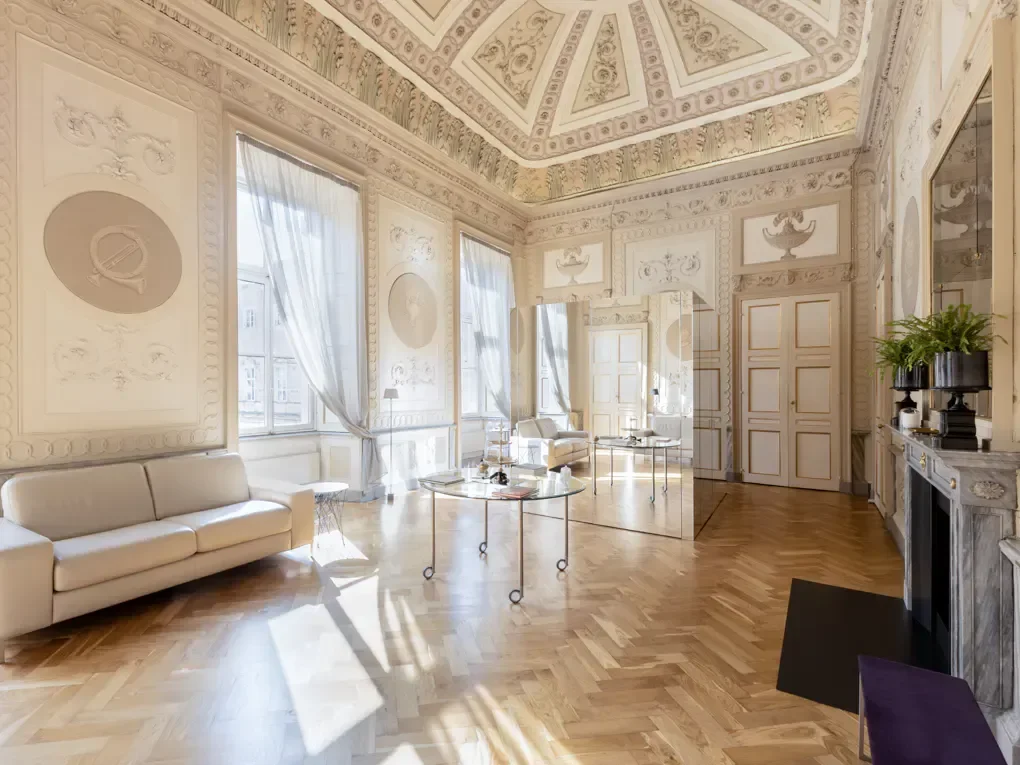
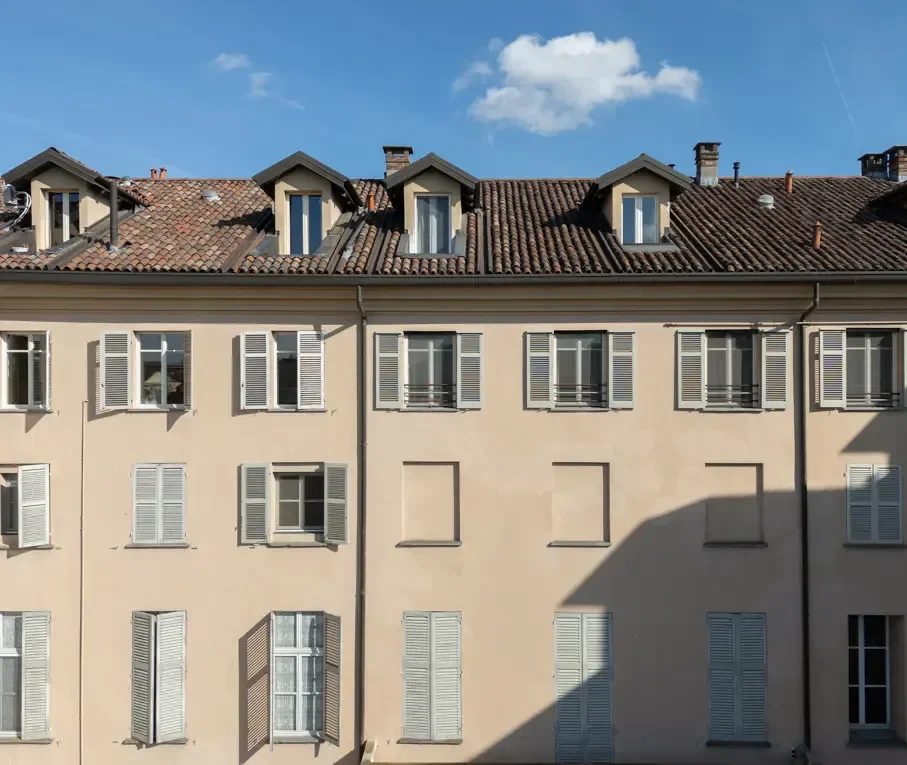
Piano nobile apartment within a listed 1700s palazzo.
Asking Price
€195,000
Bedrooms / bathrooms
1 bedroom, 1 bathroom.
Historic features
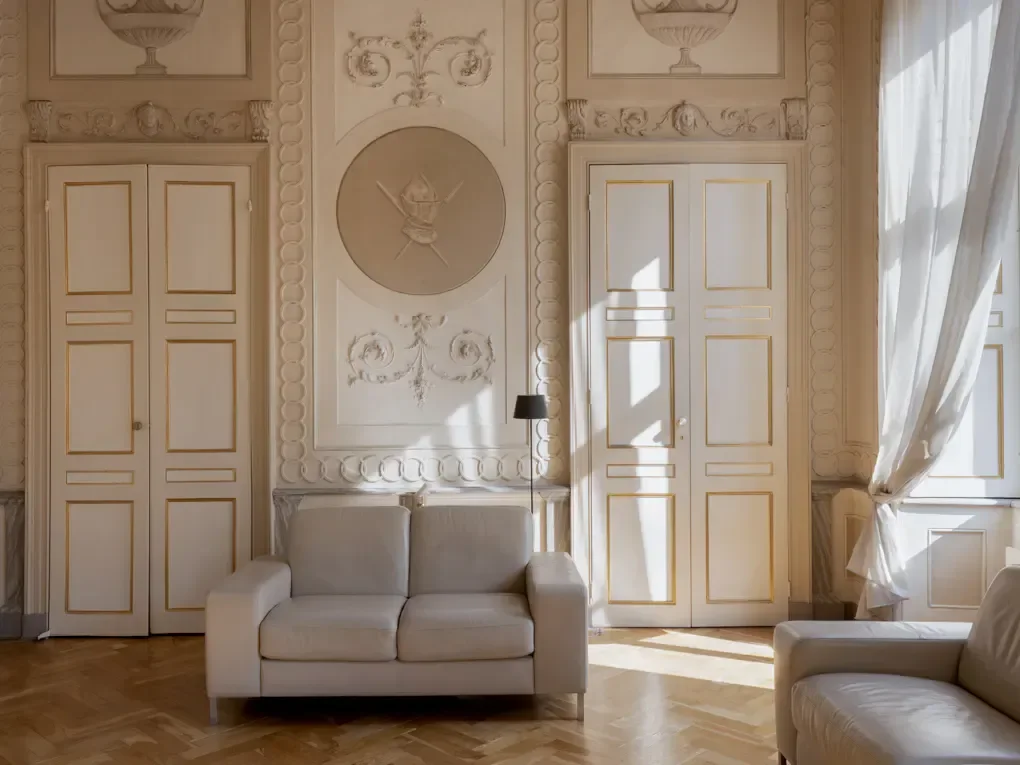
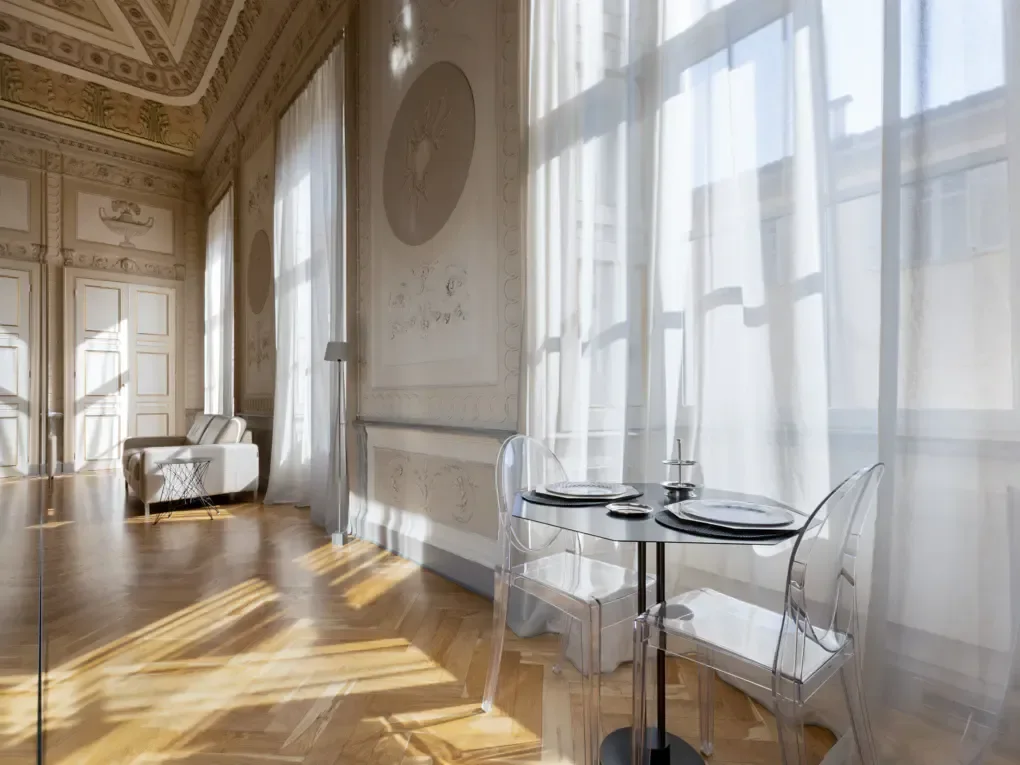
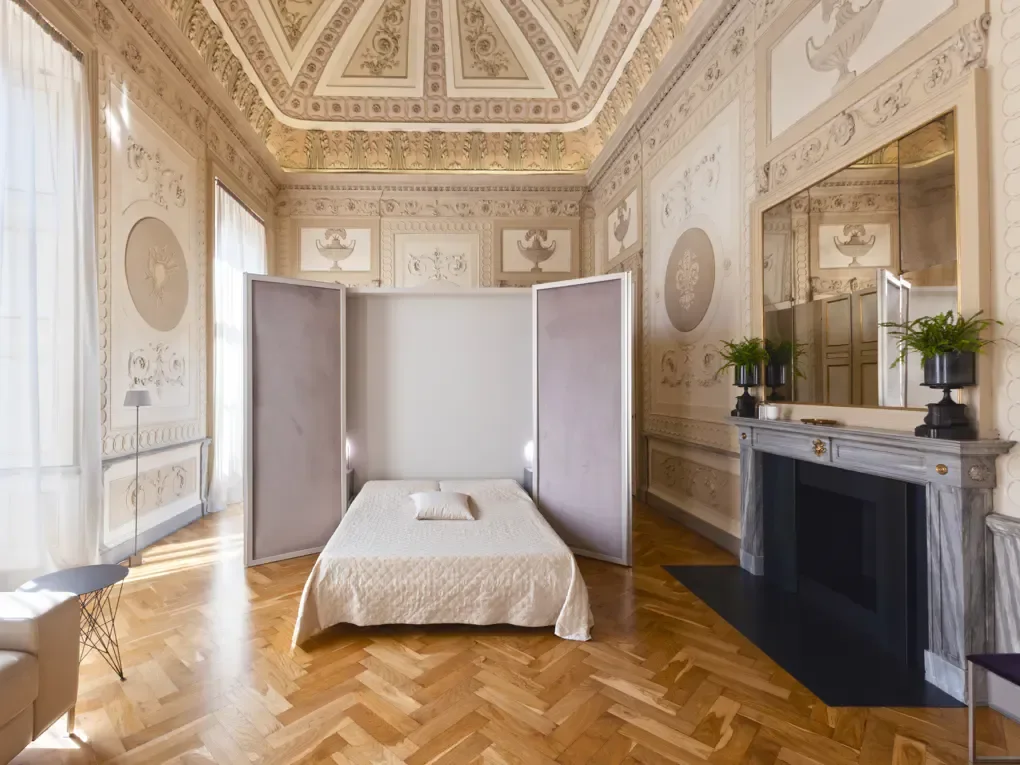
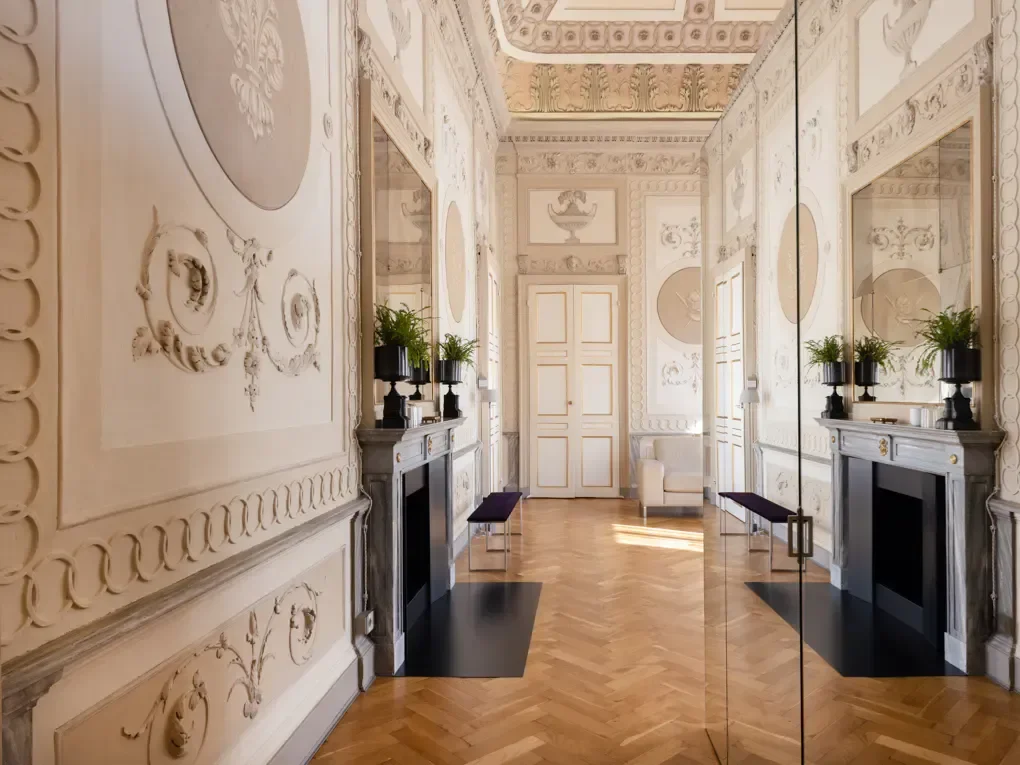
Original frescoed ceilings and restored parquet flooring.
Modern intervention
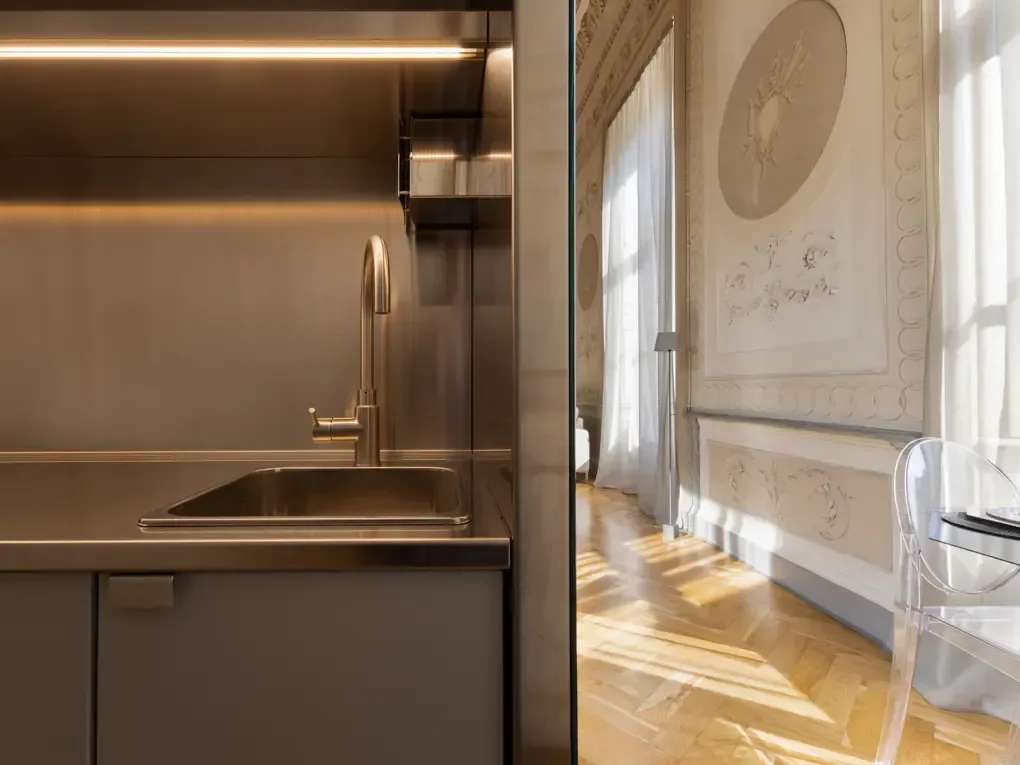
Custom mirrored central volume concealing the bedroom, kitchen and bathroom.
Heating
Concealed radiant-panel heating.
Ancillary space
Cellar on the lower level.
Energy rating
Energy Class D.
Lifestyle angle
Design-led historic pied-à-terre with possible boutique rental appeal in the Monferrato wine area with rail links to Turin and Milan.
Risk Radar
Overview
This is a visually distinctive one-bedroom flat whose value lies in the tension between old and new. The selling points are unusually strong for the price point: piano nobile positioning, frescoed ceilings, restored parquet, a design-led custom intervention, cellar storage and an Energy Class D rating that is better than many historic properties. The risk, however, is that much of the value also depends on documentation. The mirrored central volume is not just a decorative feature. It appears to reorganise the apartment's functional heart by concealing the bedroom, kitchen and bathroom, so the buyer needs to know whether it was treated as a lawful internal reconfiguration with proper technical sign-off, whether the current layout matches the filed planimetria, and whether the apartment remains fully compliant for residential use.
The second theme is heritage exposure. A listed palazzo can be wonderful to own, but listed status can affect what can be altered, how works must be carried out, what materials are acceptable, how windows and internal finishes are handled, and how future maintenance is approved. The Ministry of Culture's own Vincoli in Rete portal is a useful starting point for checking whether there is a formal cultural restriction, but it also states that specific protection data should be validated with the competent territorial offices. For protected cultural assets, works generally require prior Soprintendenza authorisation and that process can take up to 120 days, with the possibility of further requests for clarification.
The third theme is whether this is best bought as a home, a part-time base, or a rental asset. Design-led heritage flats can let well when the paperwork is clean, but in Piedmont tourist lets require proper registration through the regional process, including cadastral data, a regional code, and then the national CIN via the BDSR platform. That means the rental angle should be treated as a question to verify, not an assumption to price in.
Targeted Questions
Heritage Status and Authorisations
The answer determines how tightly future works, maintenance and even certain finish changes may be controlled.
Buyers need the formal basis of the protection, not just marketing language such as "listed" or "historic".
A stylish intervention in a protected interior can be entirely acceptable, conditionally approved, or problematic if done without the right heritage pathway.
This helps you understand both legal compliance and whether future repairs will be unusually specialist or expensive.
Decorative historic surfaces can carry hidden conservation liabilities even when they look visually excellent.
Exit flexibility affects resale appeal and protects you from buying a layout that is effectively locked in.
Historic flats often face practical comfort limits because upgrades cannot be made freely.
A buyer benefits from knowing the real operating rules before ownership transfers.
Planning, Urban and Cadastral Conformity
It establishes whether the renovation was treated as a lawful internal reconfiguration and whether the paperwork can be traced.
The more invasive the works, the more important it is to verify engineering and authorisation records.
Mismatches between reality and cadastral records create closing risk and often force regularisation before completion.
These are baseline documents for checking identity, tax profile and whether ancillary spaces are correctly recorded.
Buyers need certainty that the cellar is legally attached to what they are buying.
In an altered historic flat, lawful status is more important than broad assurances that "everything was done properly".
A sale can still proceed without agibilità, but its presence materially affects practical usability, buyer protection and resale comfort.
The reason matters. Administrative delay is different from unresolved compliance issues.
Hidden services inside design-led joinery can be difficult and costly to regularise later.
It is the fastest way to test whether the renovation story is backed by a proper technical file.
Mirrored Cube, Layout and Build Quality
Construction type affects reversibility, maintenance, acoustics and any impact on heritage fabric.
Shared services or structural dependency would materially change risk.
Beautiful photography can hide whether the spaces are genuinely comfortable and legally functional.
Living quality, ventilation and regulatory suitability can be compromised in highly concealed layouts.
Poor extraction inside enclosed joinery-style layouts can create condensation, odours and mould risk.
Serviceability is a major practical issue in custom design interventions.
Replacement or specialist repair of bespoke mirrored joinery can be expensive and annoying.
The apartment may be more sculptural than practical, which matters for both living and letting.
These help reveal what is actually behind the finish.
Frescoes, Floors, Windows and Comfort
Ceiling art can represent both the property's main value driver and its most delicate liability.
Buyers need to distinguish between proper conservation work and superficial presentation.
Everyday design decisions may be limited in a protected historic interior.
Recently refinished floors may look perfect now but still have movement, wear or moisture sensitivity issues.
Localised floor issues can signal moisture, poor subfloor treatment or movement during renovation.
Window performance will heavily influence comfort, noise and heating bills in a large-volume historic room.
Historic flats can be charming in photographs and uncomfortable in August.
Comfort expectations should be grounded before you price the property as a full-time home or premium rental.
Heating, Utilities and Running Costs
Running cost, response time and repair complexity vary significantly by system type.
Even efficient systems become a problem if maintenance access is awkward.
The class alone is not enough to assess likely bills, technical assumptions or upgrade constraints.
Real bills often tell a better story than the certificate alone.
Historic centres do not always guarantee strong digital infrastructure inside old buildings.
Condominium and Building Health
In a historic palazzo, service charges may be modest now but exposed to sudden upward pressure.
Minutes often reveal risks long before agents mention them.
Special works in an 18th-century building can materially alter the effective purchase price.
Governance quality often matters as much as the physical condition of the building.
Water ingress from above is one of the fastest ways to destroy decorative ceilings and premium finishes.
Lower-level moisture can affect both storage usability and broader building health.
Shared infrastructure deficiencies can become your problem after completion.
Access, Cellar and Daily Practicalities
Access affects daily comfort, visitor convenience, ageing in place and rental appeal.
Elegant old buildings can be operationally awkward.
A cellar is only a value-add if it is legally attached and genuinely usable.
Buyers should not assume flexible use in a historic building.
Historic-centre parking friction can reduce day-to-day enjoyment and rental convenience.
Rental Potential and Exit Strategy
Actual trading history is far more useful than generic yield optimism.
In Piedmont, tourist letting requires regional registration tied to cadastral data, and nationally the CIN is issued through the BDSR and must be displayed in listings.
Legal permission and practical tolerance are not the same thing.
The best use case affects both value and negotiation strategy.
Demand in wine country is not automatically the same as demand for one protected urban flat in a specific town.
Distinctive design can increase desirability for some buyers and narrow the resale pool for others.
Negotiation Intelligence
Buyer Leverage
Medium–High
Key Drivers
Typical Negotiation Range
5-15% below asking
Neutral Phrasing Examples
Country Layer
Italy (Regulatory Context April 2026)
For a property like this, the Italian legal layer is unusually important because the apartment appears to combine heritage exposure with a substantial interior redesign.
Viewing Strategy
When viewing this flat, spend less time being impressed and more time testing the hidden parts of the concept.
Next Step
Verify from the listing:
Heritage status and approval trail
Confirm the exact vincolo affecting the palazzo and whether the mirrored central volume and any related works were formally authorised where required by the competent heritage authorities.
Urban, cadastral and agibilità conformity
Request the visura catastale, updated planimetria, post-renovation technical file and current agibilità position so you can confirm that the apartment is being sold in its lawful, usable configuration.
Mirrored cube construction and serviceability
Ask for drawings, specifications and access details for plumbing, electrics, ventilation and heating inside the custom volume so you understand what is decorative, what is functional and what may be costly to repair.
Condominium financial exposure
Obtain the latest budgets, assembly minutes and any record of planned lavori straordinari to assess whether this elegant palazzo carries hidden roof, façade, damp or common-services liabilities.
Rental regularisation feasibility
Do not assume boutique rental potential. Check whether the apartment can be properly registered for tourist use in Piedmont with clean cadastral data, a CIR pathway and the required CIN.
A prepared buyer should approach the agent calmly and frame questions as due diligence.
Because this is a heritage-sensitive design property where legal conformity and future use both materially affect value, run it through the Property Risk Assessment before contacting the agent, and use the Rental Yield Calculator only after the rental registration pathway and condominium position have been verified.
Disclaimer: The Property Drop is buyer-focused intelligence, zero sales agenda. We curate exceptional properties, in southern Europe, from third-party agents and arm you with decision tools. No commission, no transactions, no agent partnerships, no skin in the game beyond helping you choose wisely. Information stays accurate until it doesn't (properties sell, prices shift, markets move). Everything here is shared for informational purposes only and should not be treated as legal, financial, or investment advice. Images belong to original agents. Read our Terms of Service to learn more.
Buyer Intelligence:
This assessment provides general guidance based on common risk factors and publicly available regulatory information. Risk scores and checklist items are indicative only and must not be considered legal, financial, structural, or surveying advice. Actual property conditions, costs, and regulatory requirements vary significantly by location, property age, and specific circumstances. Regulations are subject to change; always verify current requirements with qualified local professionals before making any purchasing decision.
The Property Drop provides buyer intelligence and educational research analysis only. The Property Drop does not act as an estate agent, intermediary, or advisor in any transaction and does not facilitate introductions, negotiations, or transactions. Always engage qualified independent professionals including local lawyers, surveyors, architects, and tax advisors for comprehensive due diligence specific to your property.
IMPORTANT REMINDER: When contacting property agents featured on The Property Drop, you are entering into direct communication with third parties. It's recommended that you verify all property details independently, conduct thorough due diligence, engage qualified professionals (solicitors, surveyors, financial advisors), understand your rights and obligations under local property laws, and never send money or make commitments without proper legal protection.

The Buyer Playbook: 1-Bed Stone Village House with Terrace and Rooftop Views, Grézels, France, €135,000
The Buyer Playbook: 2-Bed Apartment Overlooking Canals with Cinema Room, Livorno, Italy, €550,000
Questions ready for the agent?
The agent represents the seller.
What you ask shapes the answers you get.